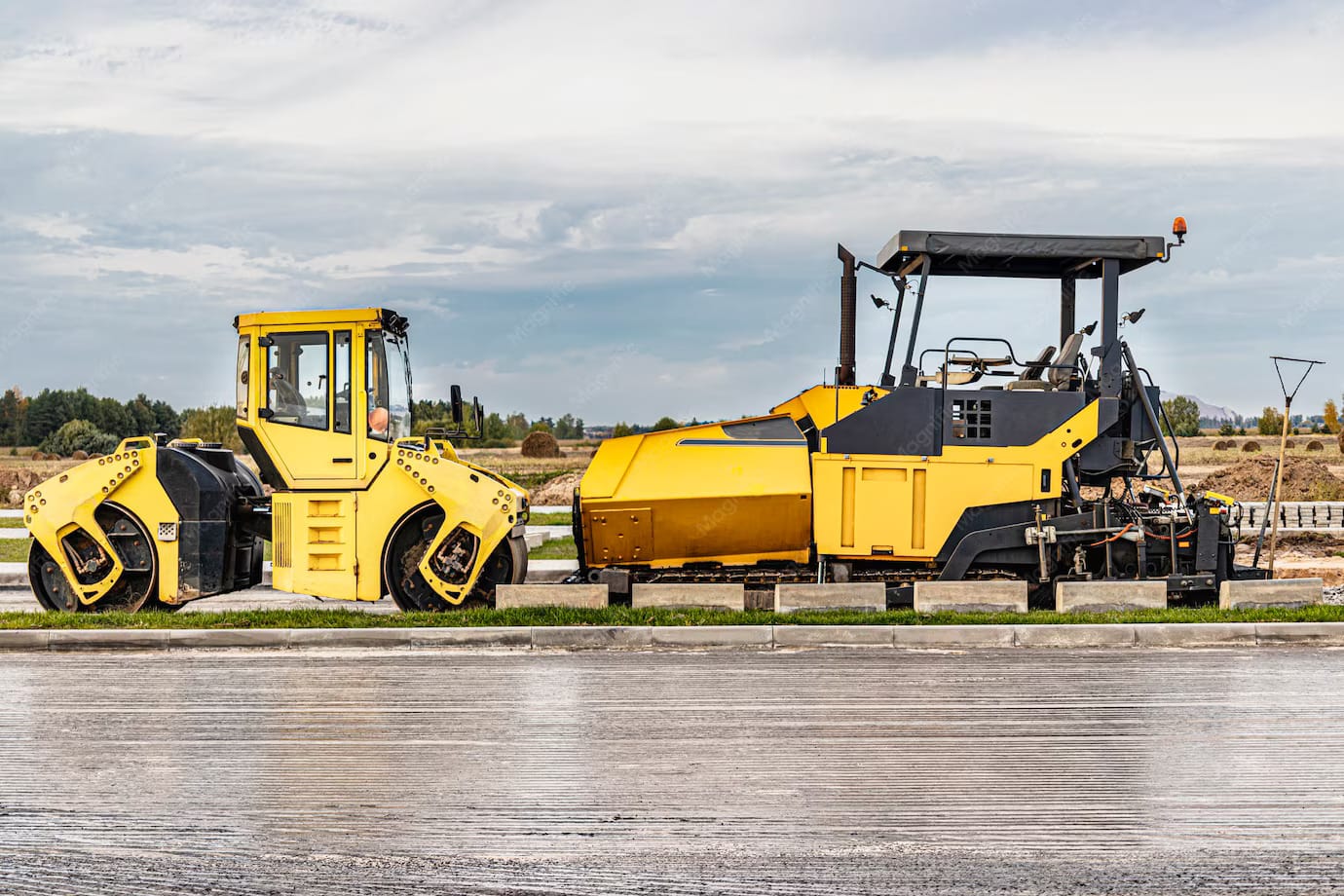
Home › Industrial and Heavy-Duty Asphalt Paving
Handle heavy traffic with confidence using industrial asphalt paving in Garland, TX. We design and build thick, reinforced asphalt sections for truck yards, loading docks, and warehouse drives that stand up to constant, high weight loads.
Precision Asphalt Garland provides professional industrial asphalt paving throughout Garland, TX, Texas and the surrounding area. Our licensed, insured crew delivers safe, clean, on-time work with a free estimate before anything begins. Call (469) 949-1928 or request your free quote.

Industrial Asphalt Paving for High‑Demand Sites in Garland
Industrial asphalt paving is very different from paving a driveway or a small parking lot. Heavy trucks, forklifts, container loads, and constant turning movements put extreme stress on the pavement. Precision Asphalt Garland focuses on industrial and heavy‑duty asphalt paving that is designed around these loads, local Garland soils, and the heat that North Texas summers bring.
We start every industrial project with a site‑specific evaluation. For properties in Garland and surrounding industrial corridors, we look at existing pavement failures, traffic patterns, turning radii for trucks, drainage paths, and the past use of the site. A warehouse near Miller Road with daily 18‑wheeler traffic needs a very different pavement section than a light manufacturing site with box truck deliveries twice a week.
From there, we design a pavement structure that considers subgrade strength, base thickness, asphalt mix design, and surface finish. Our goal is not just to pass a short‑term inspection but to give you 10 to 20 years of service with only routine maintenance. That level of performance only comes from matching the pavement build to the actual loads it will see.
How Heavy‑Duty Asphalt Pavement Is Built Step by Step
For industrial asphalt paving projects in Garland, Precision Asphalt Garland follows a tightly controlled construction sequence so that every layer carries its share of the load.
1. Investigation and layout. We locate utilities, confirm property lines, and document problem areas such as soft spots, ponding water, or rutting. On older industrial sites, we often core or test the existing asphalt and base to see what can be reused and what must be removed.
2. Demolition and excavation. Existing failed asphalt, concrete slabs, and unsuitable soils are removed to a planned depth. On many Garland sites with expansive clay, we remove additional depth anywhere the subgrade pumps or deflects under equipment.
3. Subgrade improvement. This is where industrial projects often succeed or fail. We use proof rolling to identify weak areas, then stabilize with lime or cement when needed. Stabilization is especially important on Garland clay that swells when wet and shrinks in drought conditions.
4. Base installation. We typically install 6 to 10 inches of compacted crushed limestone or recycled concrete base for light industrial and 10 to 14 inches for heavy truck and container yards. Each lift is moisture conditioned and compacted to specification so it performs like a solid platform.
5. Binder course paving. A coarse, high‑stability asphalt binder layer is placed, usually 2 to 3 inches thick. This layer takes much of the structural load from heavy equipment and spreads it into the base.
6. Surface course paving. We finish with a tighter, more refined surface mix for ride quality, fuel resistance, and skid resistance. For tight forklift areas we select mixes that resist shoving from slow, sharp turning.
7. Striping, joint sealing, and final checks. We add layout markings, seal joints between asphalt and existing concrete, and verify drainage before turning the area over for use.
Industrial‑Grade Materials and Mix Designs That Hold Up Under Heavy Loads
Not all asphalt is created equal. The industrial asphalt paving work we do in Garland uses specific mixes and structural sections tailored to the job instead of a one‑size‑fits‑all parking lot recipe.
For high truck traffic and loading docks, Precision Asphalt Garland typically recommends:
• Polymer‑modified binders in the surface mix to better handle North Texas heat and heavy wheel loads without rutting.
• Larger aggregate in the binder course to increase internal friction and spread loads. This is critical in drive lanes where trucks track almost the same path every day.
• Specially graded surface mixes in forklift aisles to resist scuffing and shearing from tight, slow turns.
Where chemicals, oils, or fuel spills are common, such as maintenance yards or fueling areas, we adjust mix designs and may combine asphalt with targeted concrete pads. This hybrid approach controls costs while giving extra resistance where spills and jack stands are expected.
We also pay close attention to joint locations and transitions. Industrial facilities usually have concrete at dock doors, dumpster pads, and equipment foundations. If the asphalt is not properly tied into these elements with clean joints and correct grades, the edges ravel and break, leading to trip hazards and rapid failure. Our crews are trained to build strong asphalt‑to‑concrete transitions that stand up to repeated impact and turning.
Designing for Forklifts, 18‑Wheelers, and Heavy Equipment
An industrial yard in Garland must be designed around actual vehicle movements and loading patterns. Precision Asphalt Garland does not simply pave everything to a single depth. Instead, we identify high‑stress zones and reinforce them.
Examples include:
• Truck approaches to dock doors, where trucks brake, turn, and sit loaded for hours.
• Dumpster and compactor pads, where front‑load and roll‑off trucks create concentrated wheel loads.
• Forklift cross‑traffic zones, where constant turning can shove and wrinkle weak mixes.
• Container storage or laydown areas, where loads may remain in one spot for long periods.
In these locations we may increase asphalt thickness, upgrade base depth, or specify a stronger mix. We often recommend reinforcing critical zones while using a more economical section in low‑stress parking or storage areas. This targeted design keeps your project within budget while protecting the areas most likely to fail early.
We also plan for water flow from large roofs and concrete yards. Concentrated roof drains or slope breaks can send water across asphalt at specific points. If those locations are not designed with proper elevation, guttering, and inlets, heavy traffic and water together will strip fines from the surface and create potholes. Our layouts include positive drainage and inlet placements that fit your building and yard configuration.
What Drives Cost on Industrial Asphalt Paving Projects
Industrial asphalt paving costs in Garland are primarily driven by four factors: thickness, subgrade condition, site complexity, and access.
Thickness and structure. More asphalt and more base mean higher cost, but also far better performance under heavy trucks. Precision Asphalt Garland provides clear options so you can see the cost difference between, for example, an 8‑inch asphalt section over 8 inches of base and a 5‑inch asphalt section over 6 inches of base, with expected service life for each.
Subgrade and stabilization. Garland soils range from relatively firm in some industrial parks to very plastic clays in others. Where soils are weak, we may recommend lime or cement stabilization. This adds material and equipment cost but avoids chronic rutting, settlement, and constant patching.
Site complexity. Projects with many manholes, utility crossings, tight work zones, and numerous concrete tie‑ins take more time and labor. Working around active operations, such as occupied warehouses or manufacturing lines, may require phasing and night work, which also impacts cost.
Access and downtime. Many industrial facilities cannot shut down completely. We plan work to keep critical routes open as much as possible, but staged work and off‑hours paving can add to the project price. During estimating we lay out clear phasing options and their cost effects so you can choose the schedule that best fits your operations and budget.
Local Timing, Climate, and Maintenance Considerations in Garland
Garland weather has a direct impact on when and how industrial asphalt paving should be scheduled. Precision Asphalt Garland structures project timelines around these conditions to avoid problems later.
Best seasons to pave. In our area, March through early June and late September through November usually provide the best combination of temperature and moisture for industrial paving. Asphalt compacts better and cures more predictably in these windows. Summer projects are possible, but we adjust crew size, rolling patterns, and start times to account for extreme pavement temperatures.
Rain and subgrade protection. Garland storms can saturate subgrades quickly. Exposed clay that gets soaked then baked by the sun can crack and lose strength. On industrial jobs, we plan excavation, stabilization, and base installation so that open areas are not left uncovered during extended rain chances, and we use temporary drainage where needed.
Long‑term maintenance. For heavy‑duty pavements, timely crack sealing and periodic sealcoating in lighter traffic areas extend life significantly. In high‑load zones, we monitor for early rutting or shoving and correct localized issues before they propagate. We also recommend routine drainage checks to keep inlets and swales clear so standing water does not accelerate stripping or freeze‑thaw damage in rare cold snaps.
Because many Garland industrial sites operate around the clock, we schedule major maintenance and overlays to avoid your peak shipping and production windows, often working during weekends or off shifts by arrangement.
Why Industrial Facilities in Garland Choose Precision Asphalt Garland
Industrial and heavy‑duty asphalt projects are long‑term infrastructure decisions. Precision Asphalt Garland combines local soil and climate knowledge with industrial‑grade construction practices so you are not guessing about how your pavement will hold up under real‑world use.
We provide detailed proposals that include pavement sections, thicknesses, mix types, and phasing plans instead of a single lump sum with no explanation. This transparency lets your facilities team, engineer, or ownership group understand what they are actually buying.
Our crews are experienced in working around live operations, coordinating with your shipping and safety teams, and maintaining clear access routes during construction. From initial concept through final striping and turnover, you deal with a team that treats your yard or plant as a critical asset, not just another paving job.
If you are planning a new facility, expanding a loading yard, or replacing failing pavement in Garland or nearby, Precision Asphalt Garland can evaluate your site, design an appropriate industrial asphalt paving section, and deliver it with minimal disruption to your operations.